
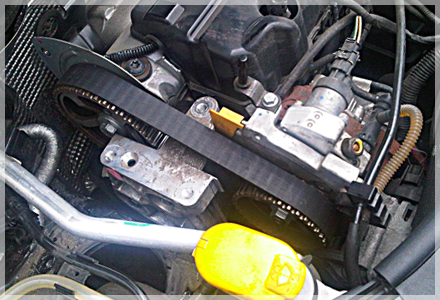
 Your Renault vehicles engine, be it a petrol or diesel variant will at some point require routine Renault maintenance. It will have a “timing belt”. The sole purpose of the “timing belt”, also known as a “cam-belt”, is to provide a connection and drive between the camshaft(s) and crankshaft ensuring that the pistons and valves operate in the correct sequence and at precisely the correct time. The “timing belt” is not to be confused with the “auxiliary belt” which is located on the outside of the engines cases and drives the vehicles accessory systems such as power steering, air conditioning compressor, water pump, etc and they require frequent replacement. Like most drive belts, the “timing belt” and its associated components have a finite life span and whilst Renault do issue recommended guidelines on how long they should last for they are just a recommendation and there are no definitive black and white timescales to how long a belt and associated components will last for. At present Renault UK recommends that most modern engines have the timing belt kit serviced in its entirety and be changed at either 72,000 miles or after 5 years (which ever milestone is reached by your vehicle first, not which is more convenient to you). In some cases your vehicle may start making an odd ‘ticking’ noise that seems to increase in speed as the engine revs increase however there are usually no indications of impending timing belt failure as the material simply rips or snaps while you are driving leaving you stranded at the roadside waiting for recovery. Other causes can be premature wear or failure of the water pump drive bearing and seals which causes the driving sprocket to seize up or even snap off. Normally, when they seize up the timing belts driving face is stripped of the drive teeth eventually causing it to slip so the valves and pistons meet at great speed and with force… the end result is not pretty (See images below).
“Timing marks” and “floating sprockets” – Erm, what’s that? The current range of Renault engines, both petrol and diesel are generally very easy for the average DIY mechanic to work on however there are some areas which simply shouldn’t be touched unless you fully understand the simple but sometimes confusing method by which Renault designed the timing belt runs to operate. “Floating sprockets” mean the components are “Key-less” or have no “wood-rough key” locking the assembly together – these setups require some very specific knowledge and most importantly expensive locking tools to be able to correctly service the timing belt once the engine timing has been ‘set’ to its default position. Some garages and individuals own some of these tools but not the full set as they follow incorrect processes created by outside sources which simply do not make them aware they exist or that they are required. Other garages and individuals simply refuse to purchase or use them thinking pen marks will see them through the job as it did with other engines. Failure to use these tools can allow the components to slip without moving the sprockets (This is why it is called a “Floating” setup) and result in bent valves meaning costly top end engine rebuilds. Most of the time it simply results in the timing being incorrectly set – In most of these cases the timing tends to be wrong by a degree or two which may not be enough to cause major engine damage or bend valves… infact, the engine will even start and rev freely but it will feel slower to the customer, like it is holding back, as well as use more fuel – generally the overall performance of the vehicle will be effected during driving around town or on motorways.
It is therefore crucial that you follow the timing belt replacement schedule to the letter and not  neglect it – If all of the above wasn’t enough to get your head around you should also be aware of the Renault “Parts Replacement Processes”. These processes set out clear instruction for each engine platform that due to the long periods between service intervals that other maintenance tasks be carried out at the same time and that specific parts also be replaced. This is where our years of Renault specific maintenence experience becomes invaluable and is the difference between simply having a belt changed on the cheap, potentially costing you twice when it all needs doing again Vs having these parts replaced by knowing what to look for and having the job done correctly first time round
(Example: oil leaks inside and around the timing casing which can result in contamination of the timing belt allowing the floating setup to “Slip”)
These parts normally include the following:
-
Timing belt idler(s) and tensioner
-
Auxiliary drive belt, idler(s) and tensioner
-
Camshaft oil seal(s)
-
Camshaft sprocket retaining nut(s) and bolt(s)
-
Crankshaft pulley bolt
-
Water Pump (Where timing belt driven)
-
Inspect the VVC “Dephaser” mechanism (and replace if required)
-
Inspect the upper timing cover for signs of oil leaks (and remove, clean and re-seal if required)
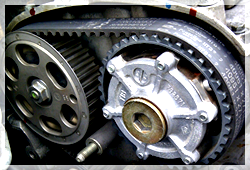
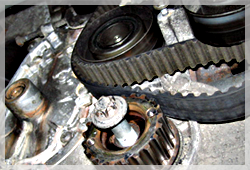
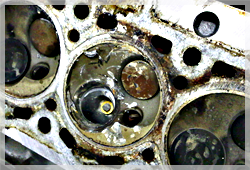
(images above show some common faults due to incorrect maintenance)
Changing a currently functional timing belt may seem like a waste of money to some customers especially when Renault claim 5 years is possible but we look at it as preventative maintenance that will save you a lot of headache down the road. We’re talking time, money, energy, and unnecessary aggravation in the event of failure – Do you know when your vehicles timing belt was last changed? If in any doubt, have it serviced!
A timing belt service with Diamond Motors isn’t as expensive as you might think – prices start from just £80 fully supplied and fitted. Most services for Renault vehicles are also offered on a fixed price basis with no hidden extras. To view the current price guide please click the link above or get in touch with us to obtain a vehicle specific quote.